REOS turns a broker's listing into a structured deal record — acreage, zoning, utilities, and a grade — before anyone else has finished reading the email.
Great opportunity!
±37 acres36.8 gross · 28.4 net
on Ewing Chapel Rd, Gwinnett County. Mostly wooded, gently rolling.
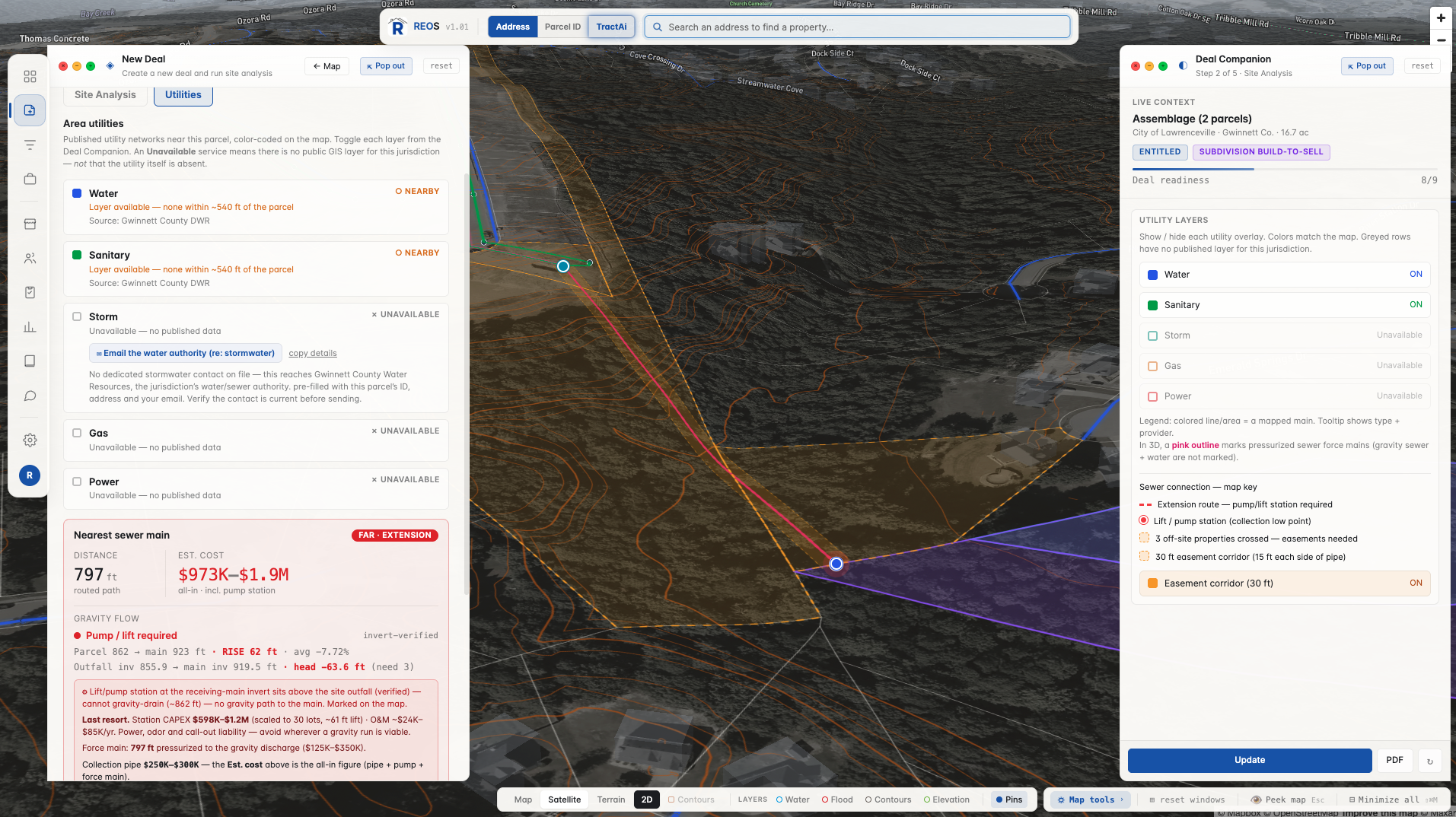
Sewer is at the road.797 ft · pump required.
Zoned residentialR-100 · 90 ft min lot width
— should be an easy
50+ lot41 lot
subdivision. Water and power available. Motivated seller,
asking $2.4Msupported at $1.86M. Bring offers.
Assembled from public record
The same deal and the same diligence. REOS pulls what every land underwrite needs from sources you already trust — then hands you the answer instead of the homework.
Who it's for
Select one to see where REOS fits.
A lift station, an unbalanced cut, a buffer measured from the wrong line — these sit in county records the whole time you're negotiating, and none of them are in the listing.
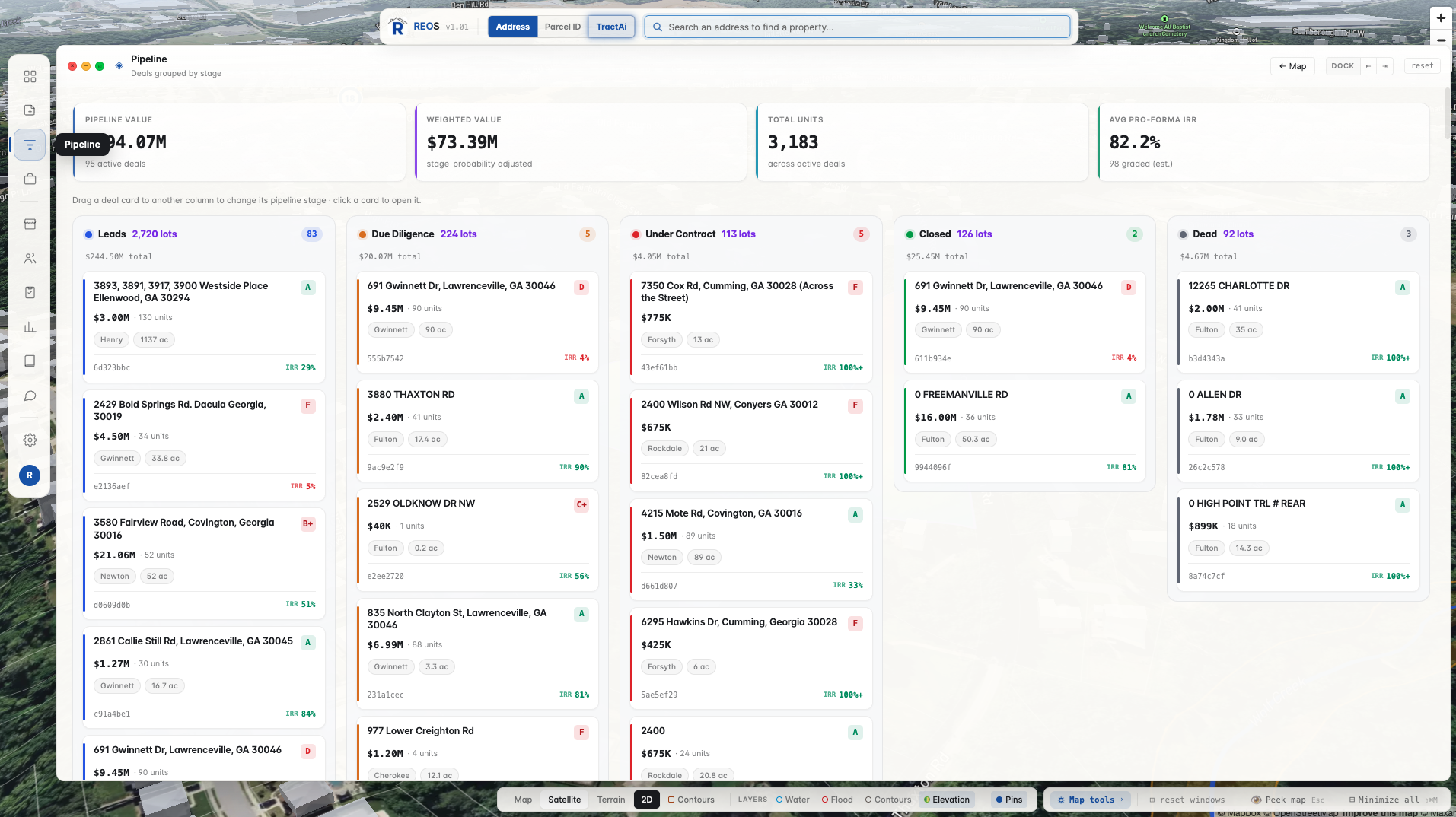
REOS holds the schedule, the units, and the obligations for every contract in the book, so the land team runs on a system instead of a spreadsheet, multiple open Google tabs, and somebody's memory.
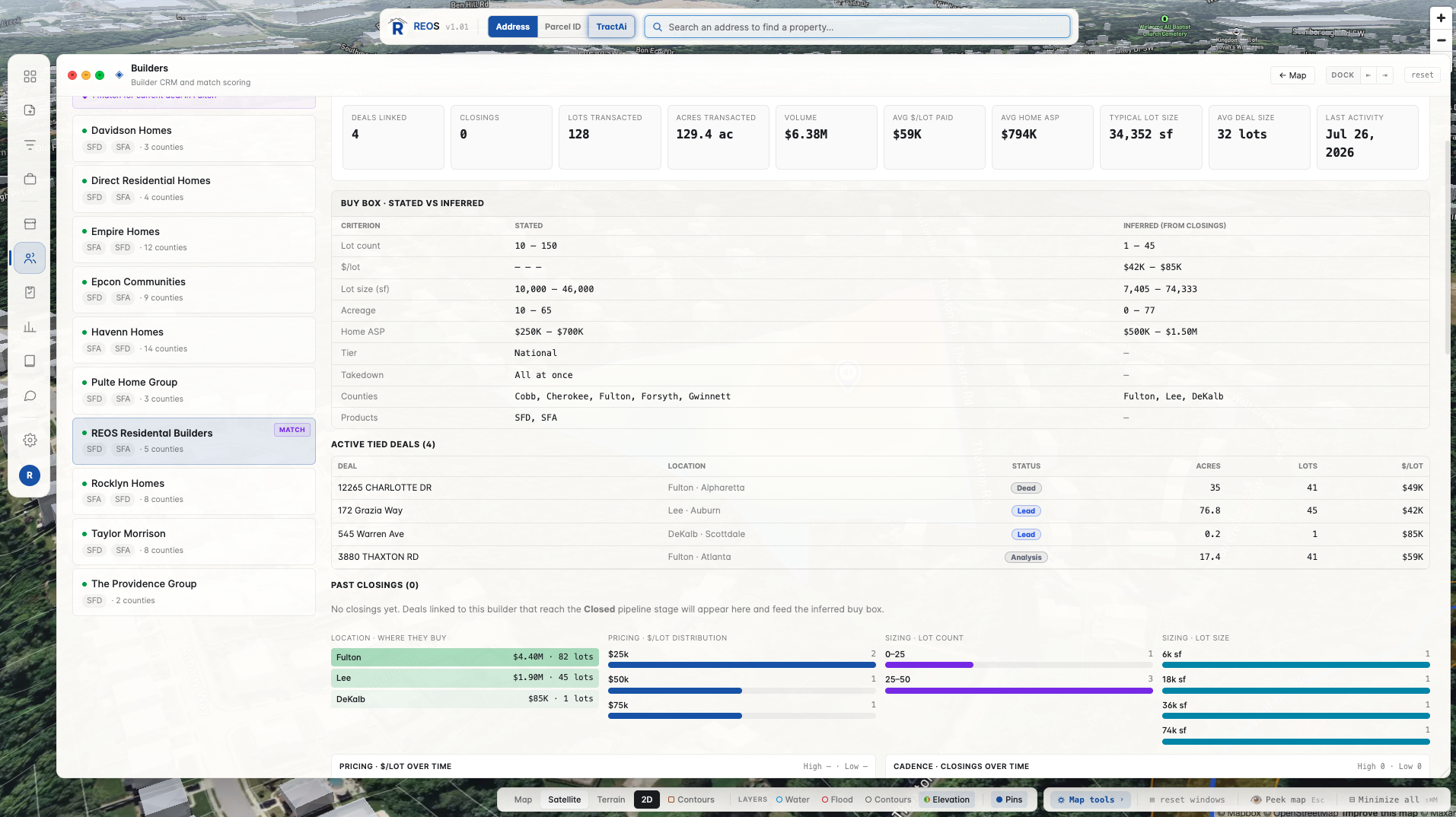
Every builder will tell you their buy box. Their transaction history tells a different story. REOS keeps up with every builder you work with, so the call list for a new listing is a simple call list instead of a memory you have to dig for.
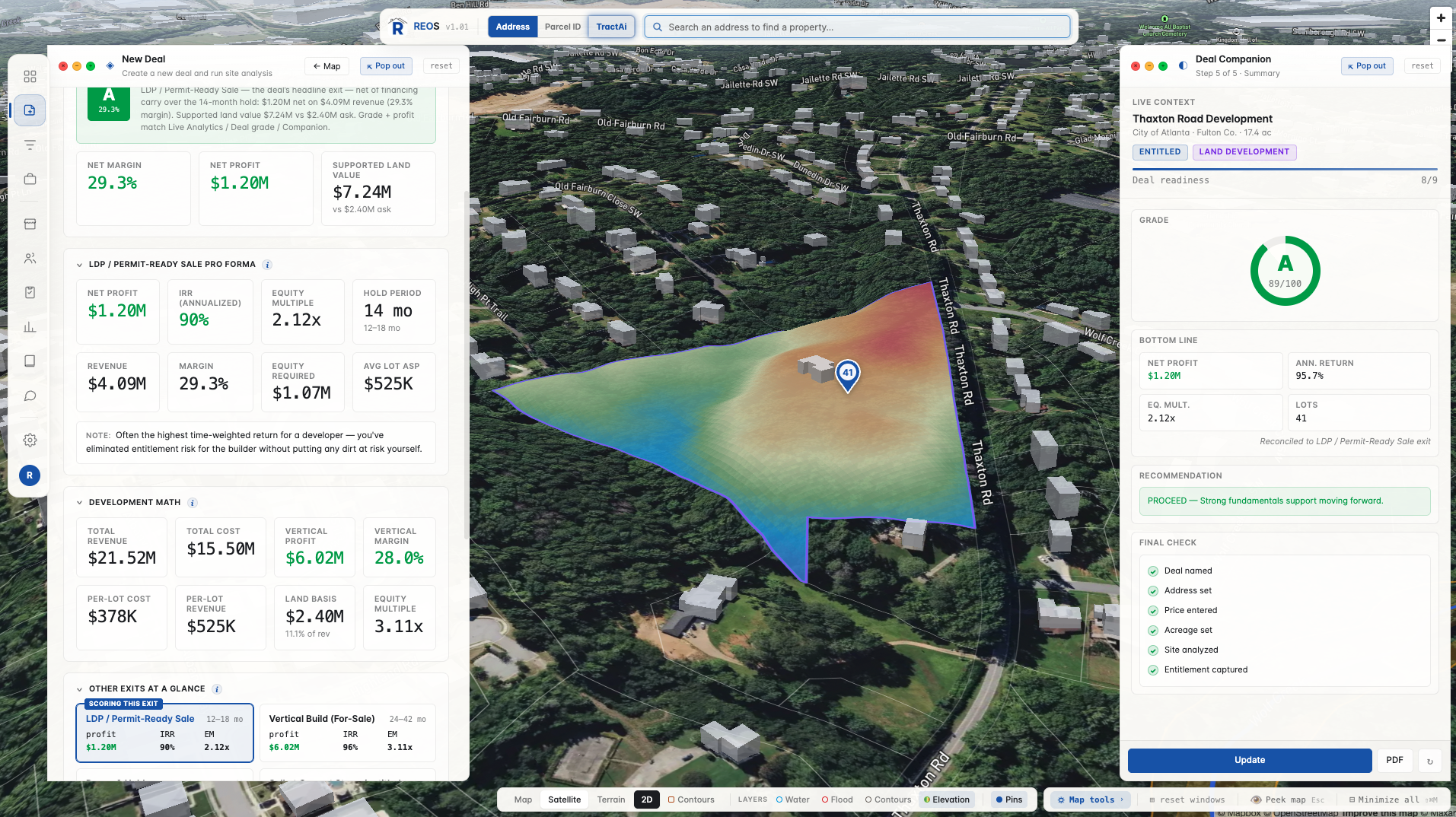
REOS runs every exit the parcel supports, computed from public record rather than from the sponsor's spreadsheet, so the number in the deck has something to be measured against.
What REOS checks
Each one is knowable from public record before you sign. Each one routinely isn't checked.
Whether the outfall can actually reach the main by gravity, verified against invert elevations rather than assumed from proximity.
Distance along the right-of-way and across the parcels you'd need easements from — not a straight line on a map.
Station CAPEX, annual O&M, collection pipe, and force main — the line most pro formas leave out entirely.
Gross acreage less stream buffers, floodplain, wetlands, and unbuildable slope, clipped to the actual boundary.
Where the grade fights you, and whether earthwork balances on site or you're paying to haul.
Undisturbed and impervious setbacks per the local ordinance, which differ by jurisdiction and quietly remove lots.
Lot count the ordinance actually supports at minimum width and area — not the number in the listing.
Per-lot fees that vary by jurisdiction and can move a deal by five figures a lot.
What the site supports given real yield and real sitework, set against what's being asked for it.
Sourcing
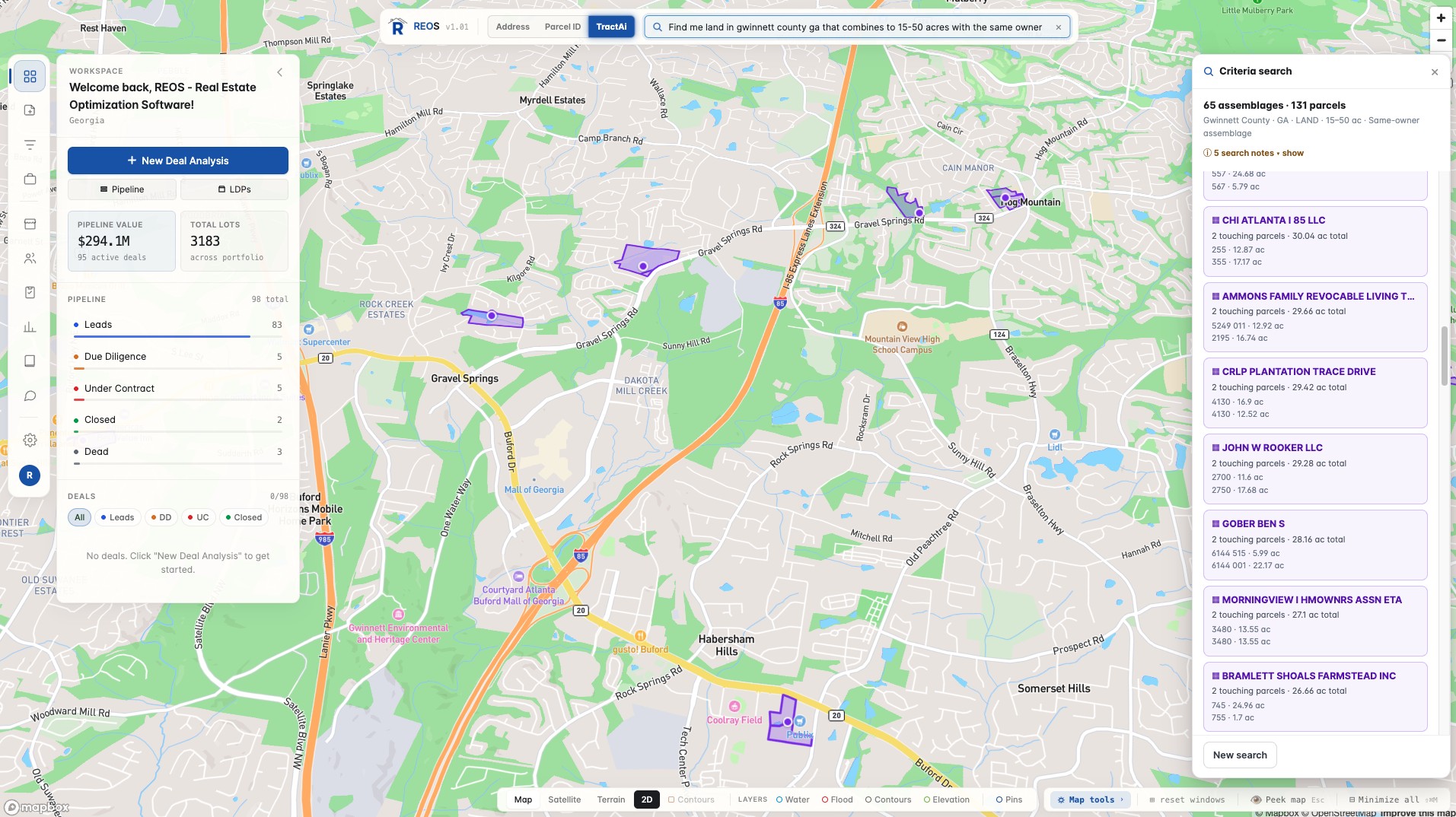
Ask in plain language for contiguous acreage under a single owner. One query returned sixty-five groupings across a hundred and thirty-one parcels, assemblies a builder's land team would never stitch together by hand, which is exactly why you aren't bidding against one.
Portfolio
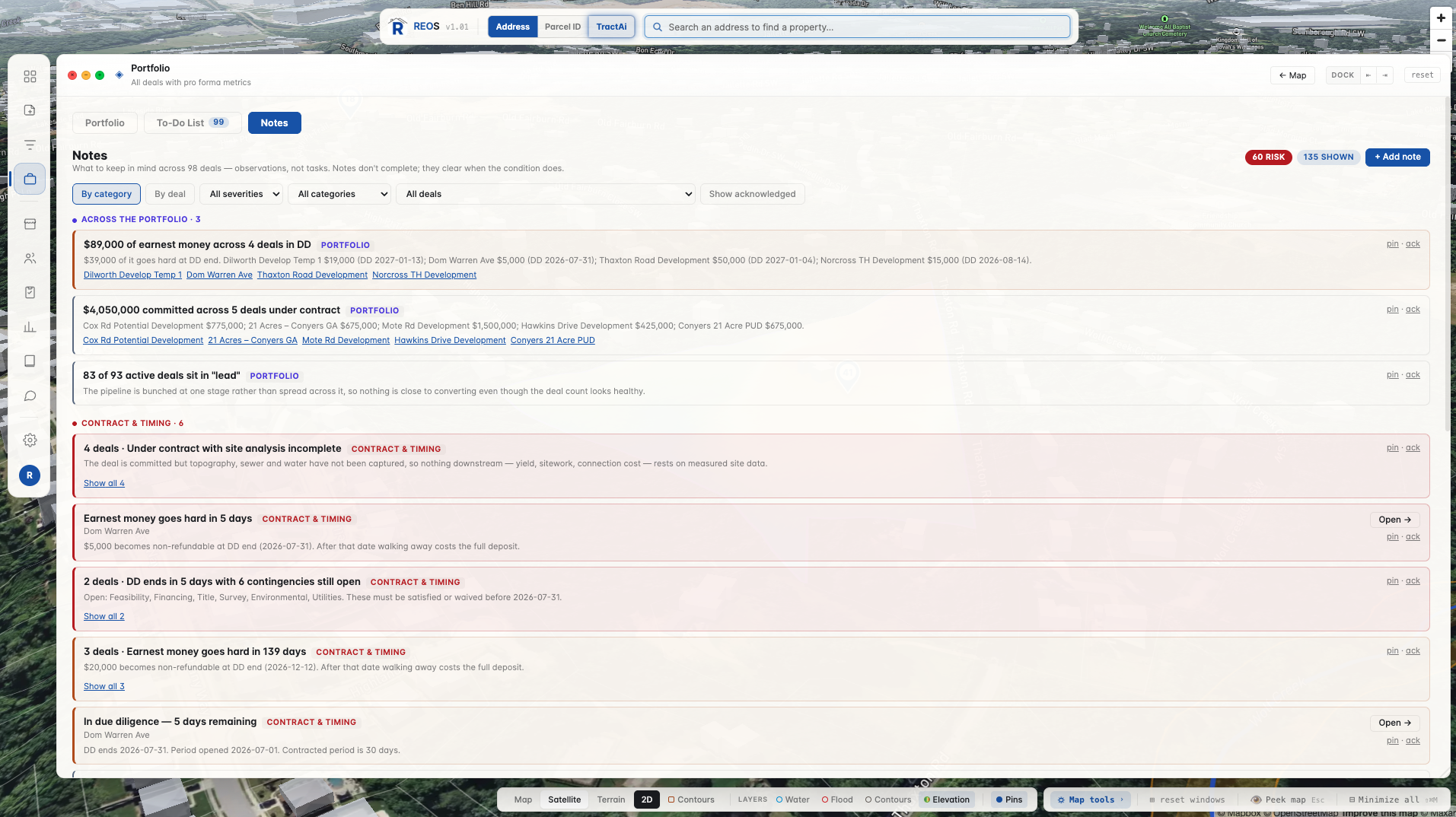
Earnest money going hard in five days. Deals under contract with site analysis still incomplete. Due diligence overdue. These derive from the state of the deal rather than from someone remembering to write them down — and they clear themselves when the condition does.
Thirty minutes and see a real deal you are underwriting come to life.